


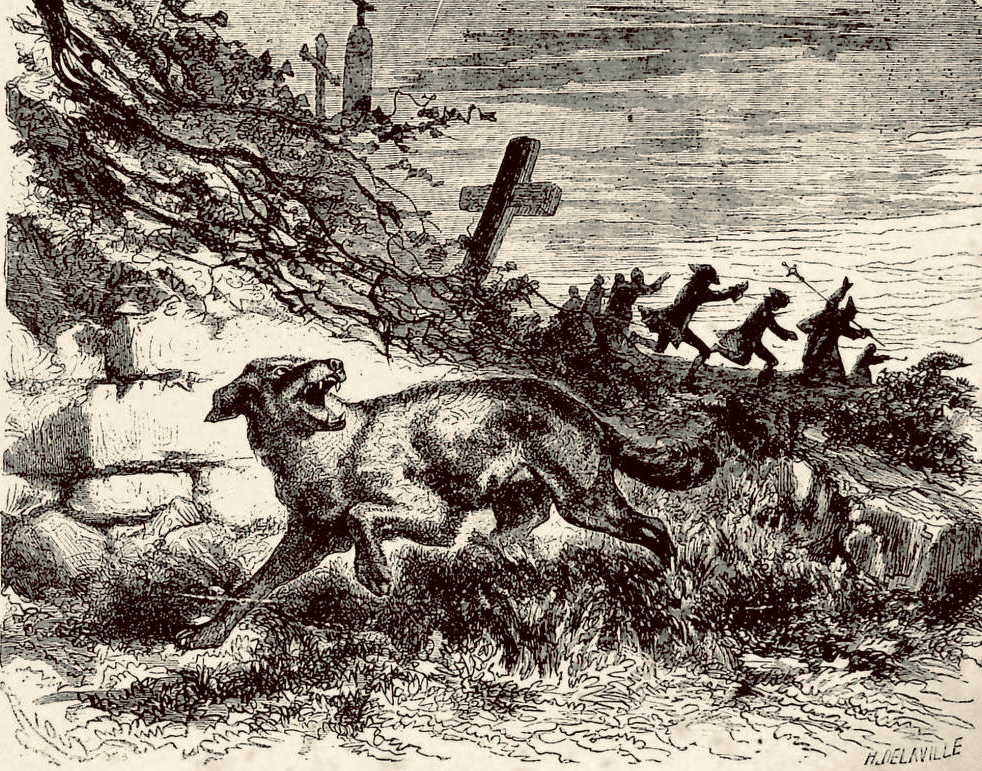
The forests have not ceased being places of terror; people believe in sorcerers; talismans are used, and there is no doubt about nocturnal apparitions and werewolves…-Baron Jean-François Gueyffier de Talairat
Formerly known as Haute-Auvergne (“Upper Auvergne”), modern-day Cantal is one of the most sparsely populated and least polluted departments in France. In remoter times, however, a not insignificant amount of writers helped to spread the idea that the isolated region was dangerous, wild, and full of preternatural beings.
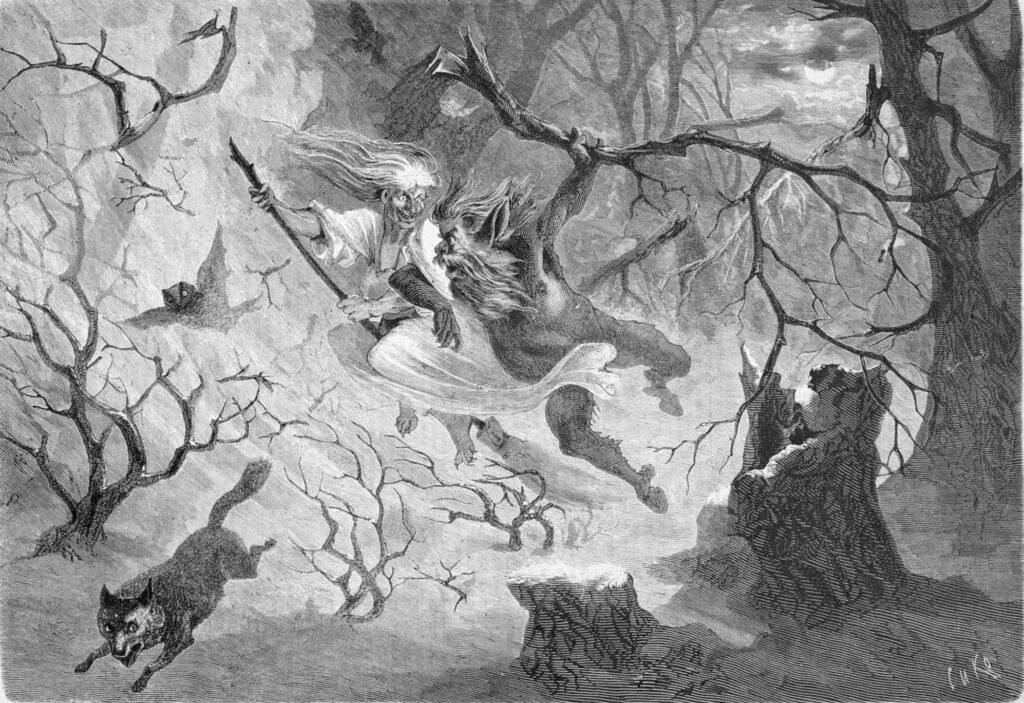
In his 17th-century court chronicle, Les Grands Jours d’Auvergne, Esprit Fléchier, took aim at Cantal’s out-of-control feudalism, observing that the worst of its country nobles defied court orders and lived like gangsters, carrying out vendetta-style beatings, murders, and kidnappings.
Other figures, such as Henri Boguet and William of Malmesbury (both regularly cited as authorities by pre-modern scholars) intimated that the region fostered werewolves and at least one necromancer (Pope Sylvester II). Stories of ghosts and fairies also circulated orally in Cantal, especially during veillées (wintertime community gatherings). Various adaptions of these vernacular traditions later appeared in printed collections by folkorists and antiquaries like François Pommerol, Paul Sébillot , and Henri Durif.
The following werewolf legend — “Le Loup-Garou de Laquérie” — is set in the vicinity of the Cantalian village of Saint-Amandin and derives from such a collection. Originally published by Antonin Meyniel, the story was reprinted in Limoges illustré in November 1908. My translation marks the tale’s first appearance in English:
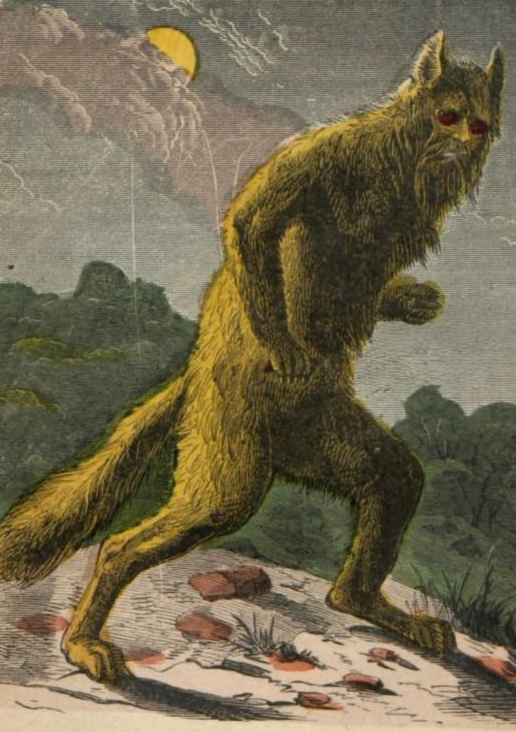
In 1869, there was great fright in the village of Laquérie [Laquairie], commune of Saint-Amandin. The poor inhabitants, grouped around these enormous boulders [the “Tranchades”] of the woods of Font-Sainte, shook with fear: the children were terrified and the old women no longer dared go out at night from their dwellings, locking themselves inside. Several phantoms had spread this terror.
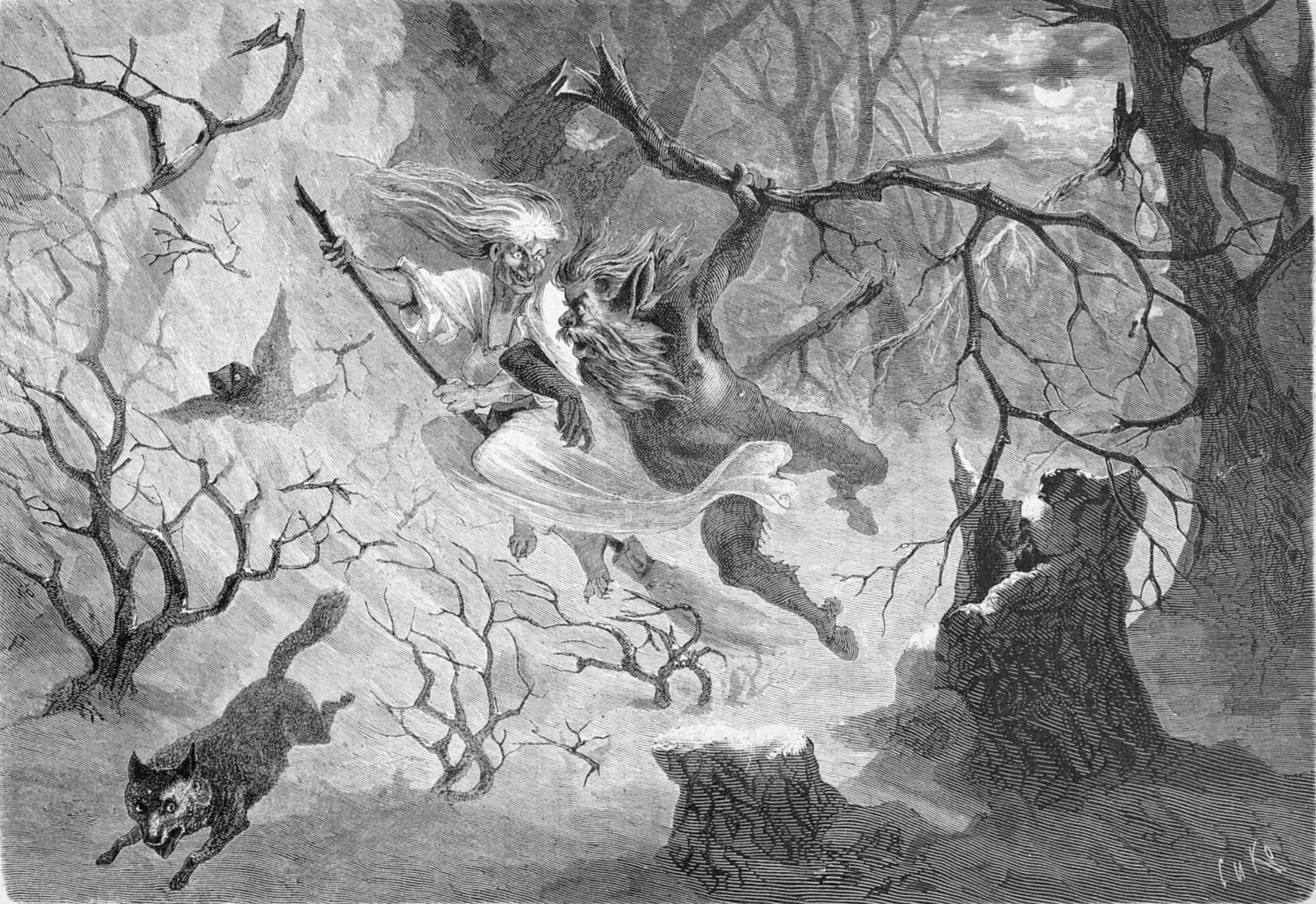
One January evening, a woman, Catou de Biron, fell suddenly ill. It was pitch black night and the doctor lived in Condat. What to do? Let a Christian woman die without help, or or risk being killed by the Evil One? Michel, the shoemaker, summoned up his courage and, despite the advice of his wife, set out for Condat. Bravely, he took the forest paths leading him to the crossroads, the particularly dangerous station, where phantoms, werewolves and farfadets [imps], led by Satan in person, habitually held their diabolical sabbaths.
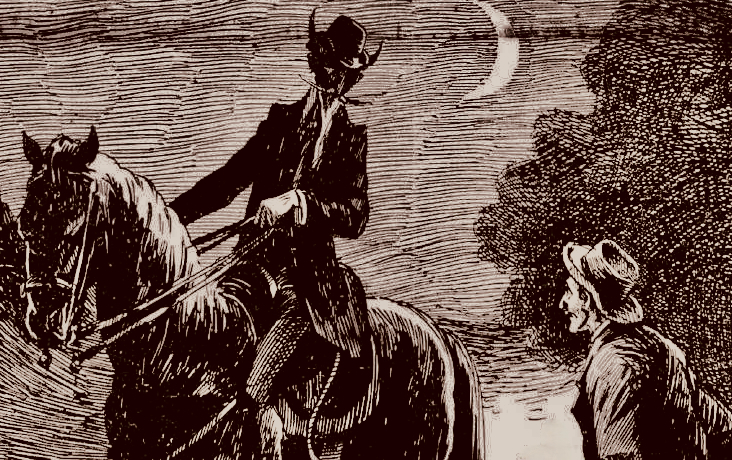
The first Friday of each month, at the stroke of midnight, there would be a market of souls. Anyone having something to sell only had to present himself with a black hen and say: “Money for my hen, please?” Immediately, the Devil would appear in the form of a distinguished gentleman and reply: “How much do you want for your hen?” And the deal would be struck. When it was concluded, Satan would add: “Brother, tomorrow you shall return here at this time. In the meantime, shake my hand, so that in the future we may be brothers for eternity.”
The next day the soul-seller would return. At the meeting place, he would find the Devil’s carriage waiting for him, which would take him to Château de Grillardare, the residence of His Satanic Majesty: “Brother,” he’d say to him, “sign the pact and, in return, I shall pay you the agreed sum for the price of your soul. Then you shall take this cloak (a bear pelt) that I give you. Every night you shall travel through eight parishes in the surrounding area. Take good care of this cloak. If anyone or anything pierces it, I shall pierce your skin at the same time. From that moment on, you will be good for nothing, and in exchange, you will have to offer me your wife, your daughter or your son. This, of course, means you must do evil, and remember that you are binding yourself to the King of Darkness for life and death.” There were, however, some commitments that were only for a period of ten years.
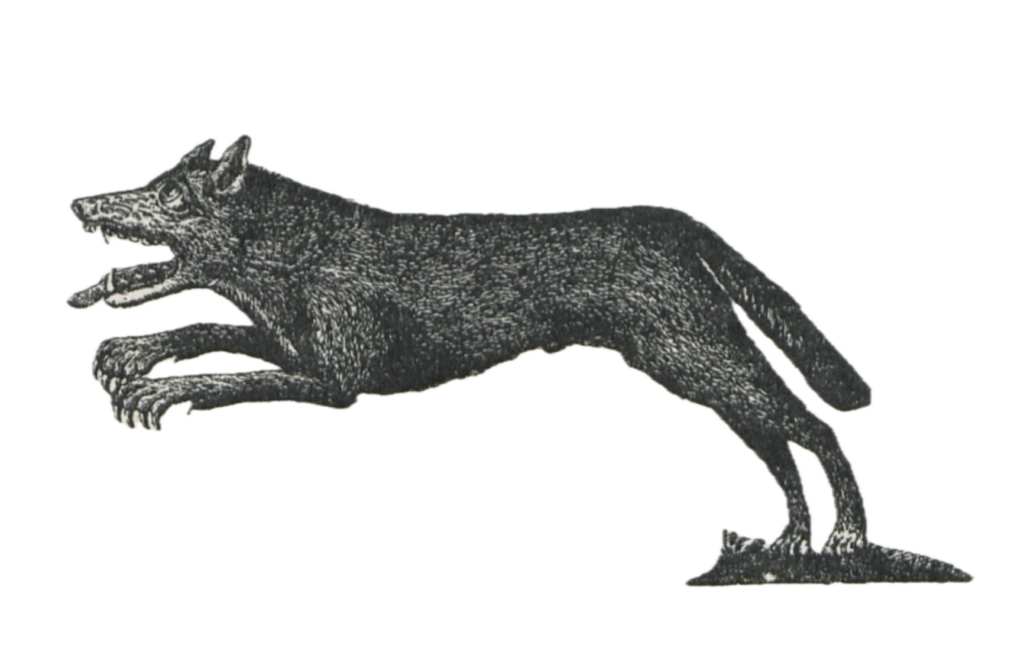
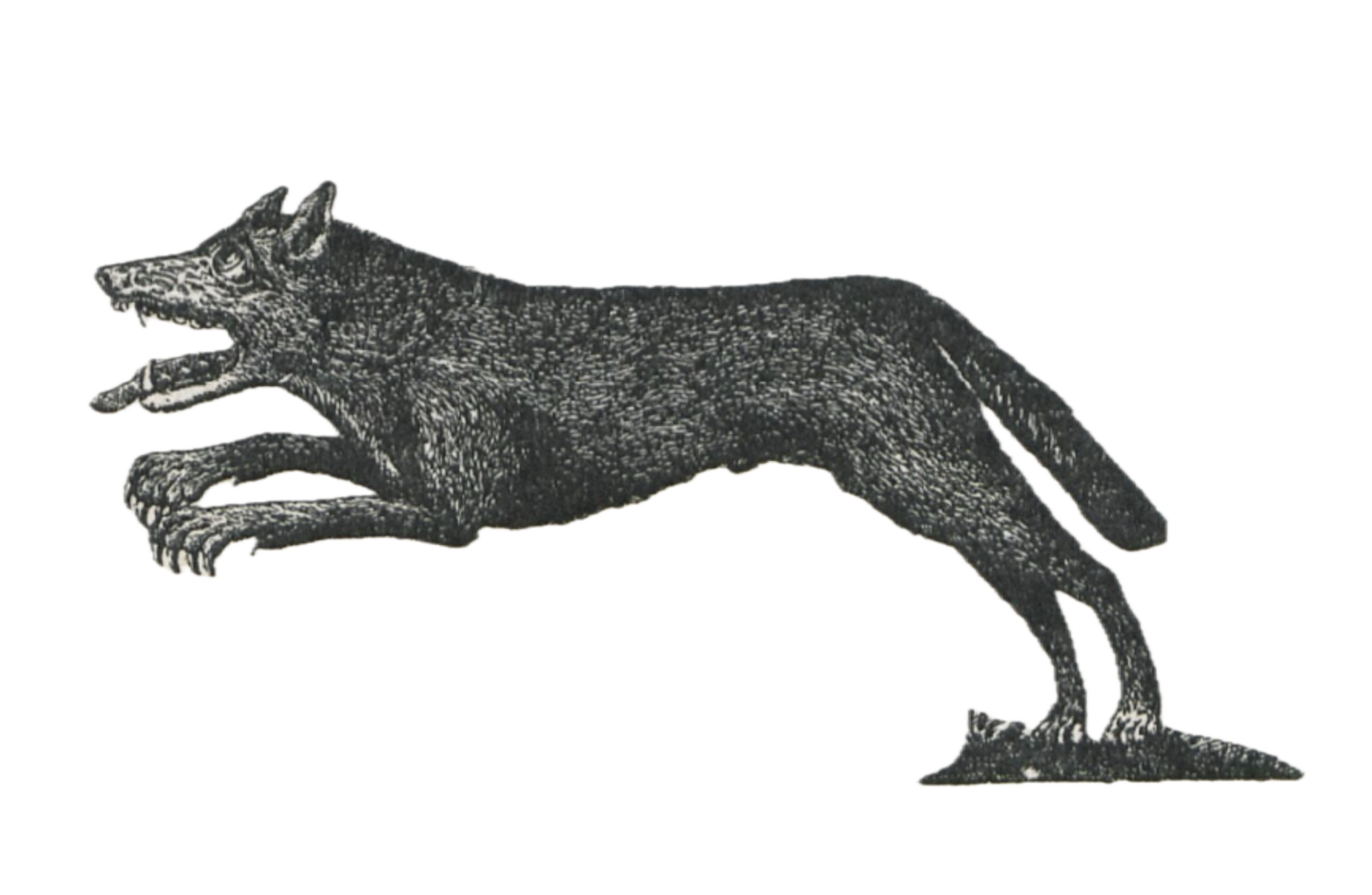
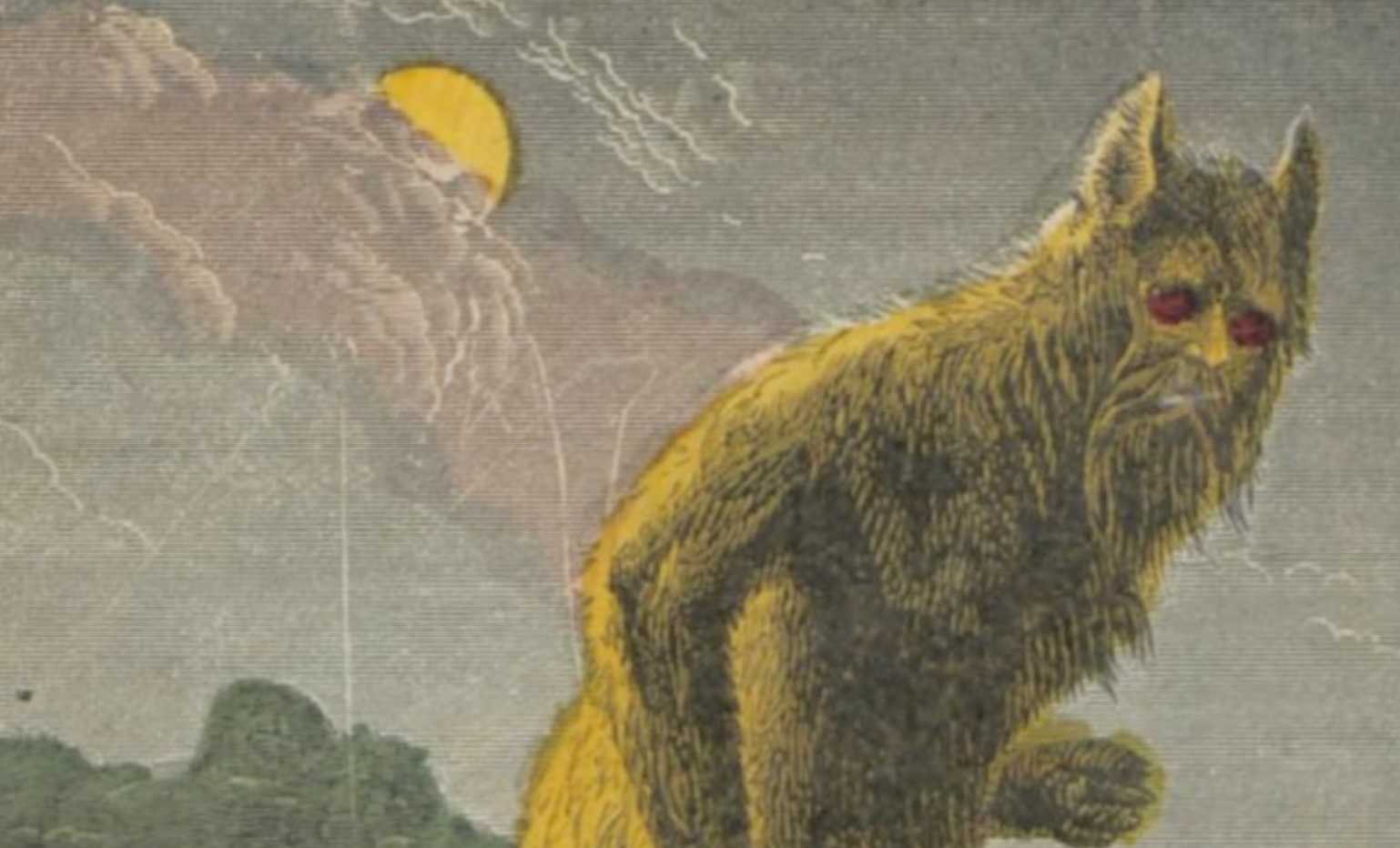
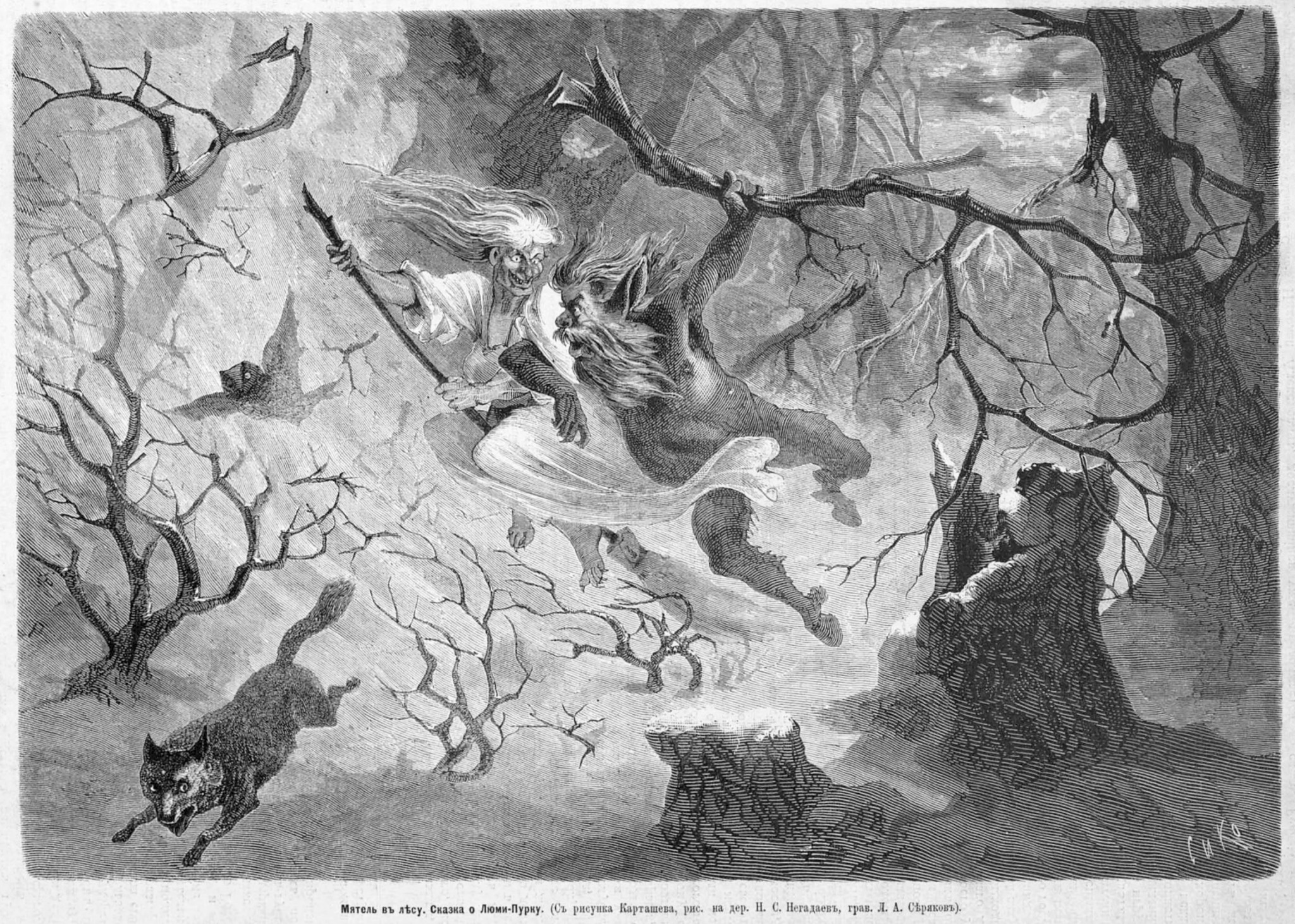
Our good shoemaker strode resolutely towards the famous crossroads. But as soon as he arrived he heard a terrifying racket: devils, imps and sorcerers, werewolves and ghosts of every shape were clattering, howling, bleating, meowing and bellowing in a hellish farandole [dance]. Michel stopped dead in his tracks and summoned all his wits and senses so as not to be frightened or faint. An enormous werewolf strode towards him and demanded his soul, as if he were asking him for the time. The man remained still; he plunged his knife three times into the ground “to purify the matter through the three mysteries”, then he struck the werewolf’s hide, which split open and immediately detached from the body it had been enveloping. Despite the darkness, Michel recognised old Garaud, the flourless miller of the Moulin-Rouge, who had thus sold his soul to the Devil since his trade could no longer feed his family.
He begged Michel to spare him and explained at length his unfortunate fate.
“For nine years now, my soul has been sold to Satan for thirty thousand francs. Ever since then, every night I run to recruit other souls for him. My contract was due to end in a year. The work I do fills me with indignation, and it is only with reluctance that I carry out the orders he gives me. So just a moment ago, I was all the less inclined to approach you, having recognised you. But an invisible force drove me towards you. My bears pelt has been pierced. To the evil spirit, I am now of no use. In exchange, I shall be forced to hand over my daughter to him for a year.”
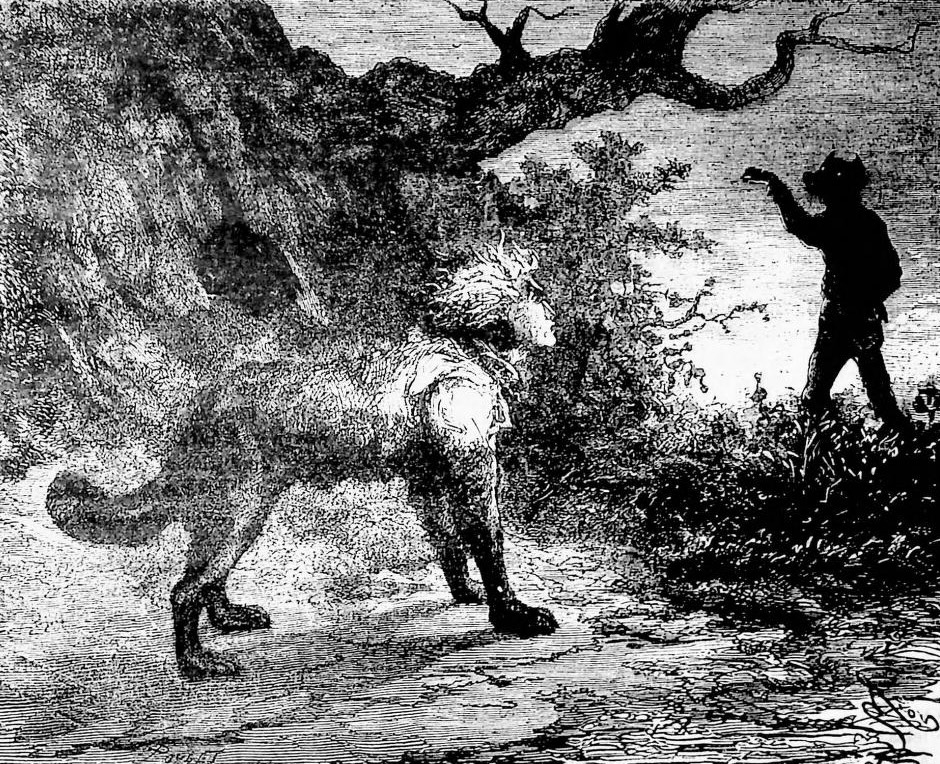
“Calm down,” replied Michel. “You shouldn’t do something that disgusts you, and it’s never too late to do the right thing. The people of Laquérie are less timid than one might think; we shall be able to get the better of the Devil. There is José, the blacksmith, the suitor of your daughter Antoinette, who is capable of defeating him. ”
“Never! My poor Michel: it’s clear you don’t know him. But why on earth are you going to Condat at a time like this?”
“It’s Catou de Biron who’s very ill: I’m going to fetch the doctor.”
“Catou! She doesn’t need medicine! I met her yesterday, at midnight, at the Pont de l’Arche. I made her swear an oath to sell her soul to Satan. It’s fright that’s given her a fever. As soon as I’ve annulled her pledge, she’ll be cured.”
“In that case, let’s both go back to the village.”
Catou recovered her health upon learning that she was allowed to keep her soul, but Father Garaud remained bound to the Evil One, despite his disloyalty. Michel the shoemaker, Chariot the carpenter, José the blacksmith, Camillou the sacristan, and Antoinette Garaud, advised by Father Bernard, the parish priest of Saint-Amandin, resolved to attempt a daring expedition to deliver him. First, the good pastor held a novena for the imminent deliverance of the soul in question; all the parishioners attended and responded to the litany he recited as devoutly as possible.
Father Garaud, whose valiant escort hid in the thicket, arrived at the crossroads at the usual hour. In secret, the carpenter carried the cord of Saint Francis, borrowed from Sister Mathilde de Soubrevège; the sacristan carried the sprinkler and holy water; and Michel carried the lantern. Antoinette wore nothing but her beauty.
Satan appeared to the miller: “You’ve brought me your daughter to make amends for your blunder, haven’t you?” She stepped forward. But at the very moment he was about to drag her into the bottomless abyss, Chariot seized him with the cord of Saint Francis and squeezed it so tightly that his tongue stuck out; Camillou sprinkled him three times in remembrance of the Three Mysteries. As he threw the holy water, he said: “May this holy water erase the pact of our friend Garaud and set him free for ever.”
“Let me go, let me go!” screamed Satan, thrashing about as though someone had emptied the entire holy water font of Condat over his head.
“Set our friend free!” José shouted at him. “Wash away the traces of your pact with holy water, or we’ll all pull the rope until you’re completely strangled.” Thus caught in a trap, Satan had to comply and declare publicly: “Father Garaud, formerly miller at the Moulin-Rouge, parish of Saint-Amandin, is no longer my brother; and as for all the victims he has claimed in the name of my damned soul, to each and every one I grant freedom.” The next day, the village was in celebration. The good priest sang a thanksgiving service attended by the entire population. Nine days later, the marriage of José and Antoinette was celebrated.
In the words of the American folklorist Charles G. Leland: “Minor local legends sink more deeply into the soul than greater histories.” To learn more about Auvergne’s seemingly endless secrets and ghostlore, sign up for our newsletter below.
![Limoges_illustré___publication_bi-mensuelle_[...]_bpt6k54257133_87(1)](https://visitauvergne.org/wp-content/uploads/2026/05/Limoges_illustre___publication_bi-mensuelle_._bpt6k54257133_871.jpeg)