

My life has been…full of events; yet no event, not even the Revolution, has left me with insights so precise and impressions so vivid as magnetism…I found myself producing by my will what, according to ordinary understanding, generally seems impossible…
-François-Dominique, Count Montlosier
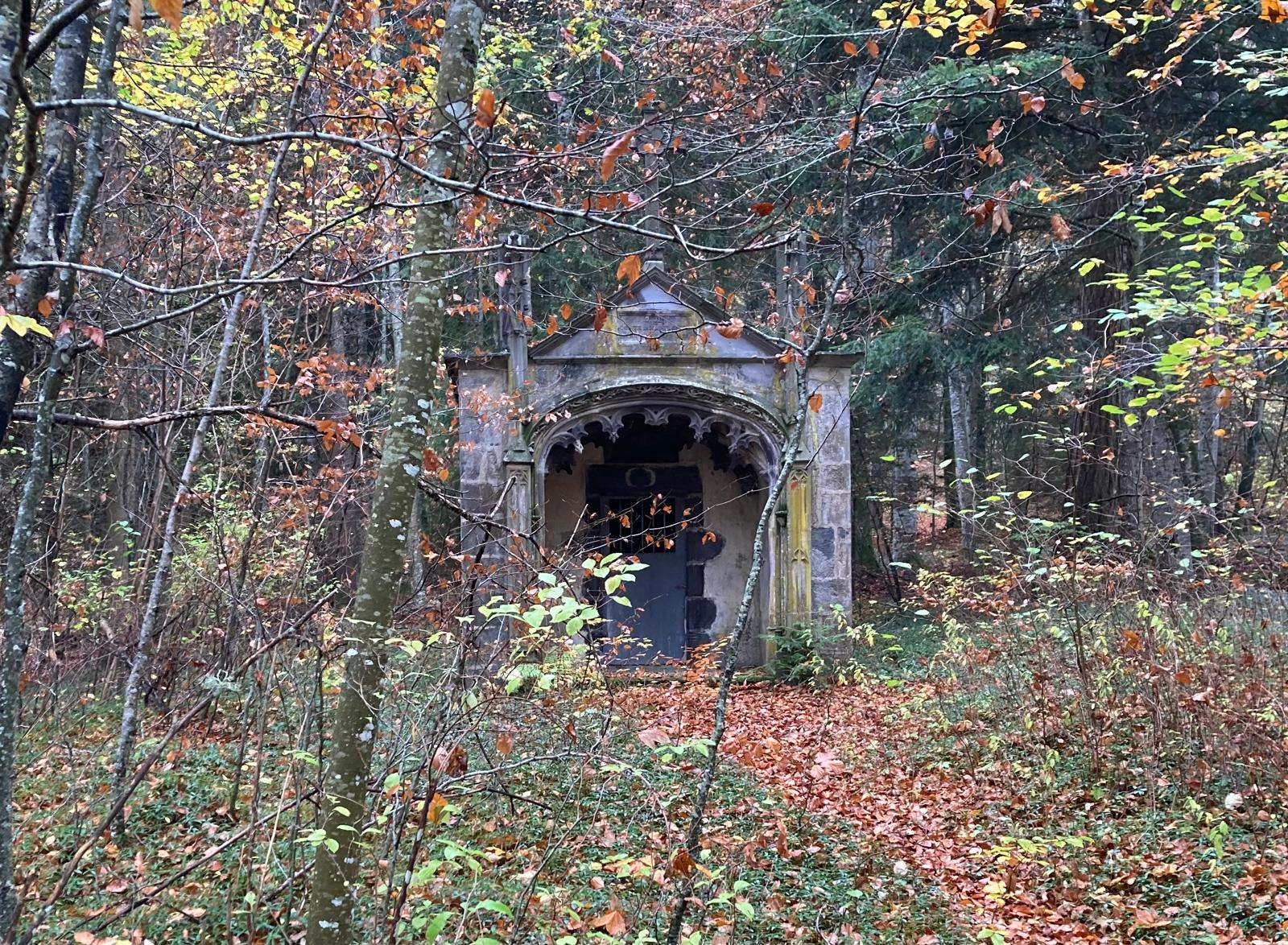
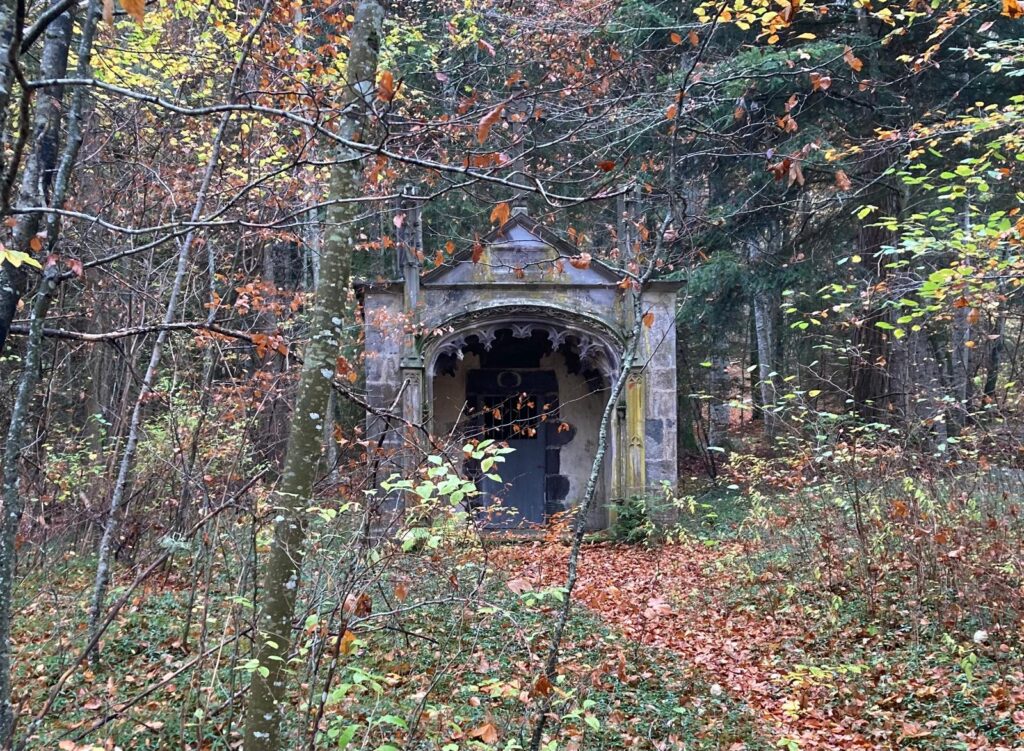
When ambling along one of the many trails that start in Randanne and lead towards the puy de la Vache and its neighbouring volcanoes, it may happen that, propelled by some vague curiosity or flitting enchantment, you wander off into the pathless woods. The hike may seem aimless at first, but as you continue trampling over brambles, fallen logs, and exposed roots, a subtle sensation arises, and slowly something begins to tug at your soul. A mysterious magnetism directs your steps, guiding you to a destination unknown.
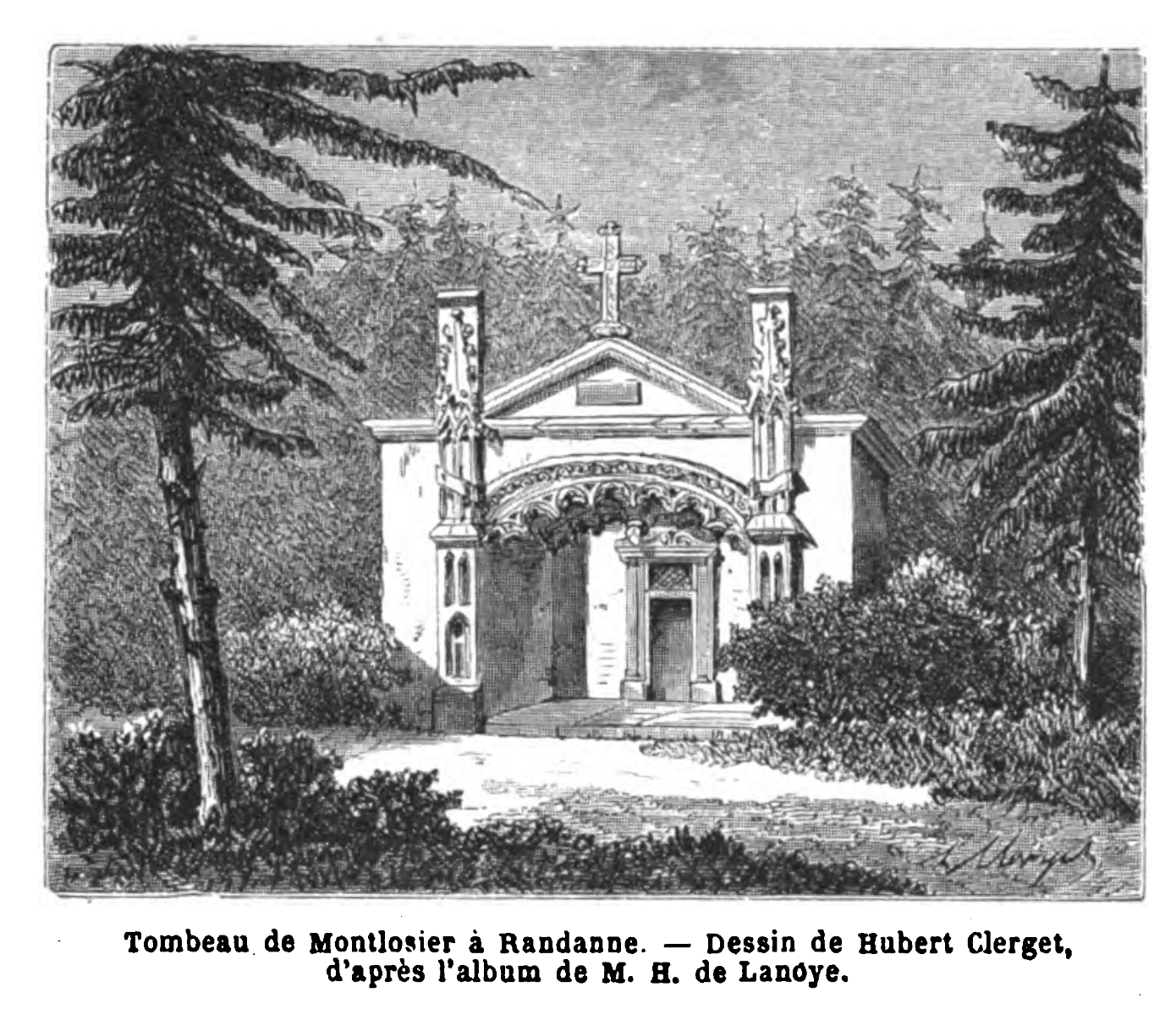
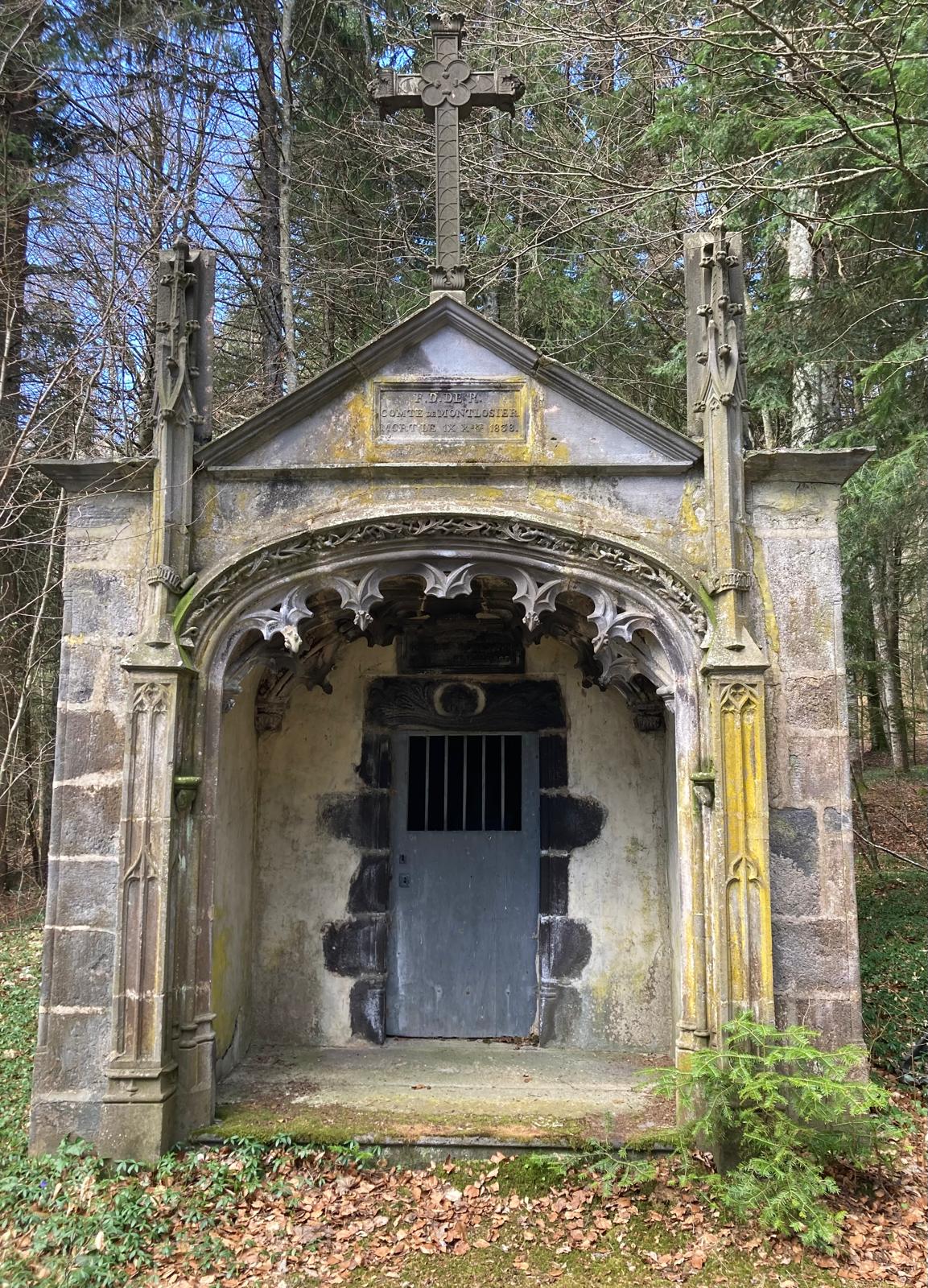
In embracing that energy — which may very well just be the spirit of adventure — you soon find yourself before the portal of a Gothic tomb. This is indeed what I experienced on one of my periodic rambles among the Chaîne des Puys. The tomb, I later found out, houses the remains of one of Auvergne’s most intriguing mavericks: Count François-Dominique de Reynaud de Montlosier.


Born on 16 April 1755 to a family of minor Auvergnat nobility, Montlosier assumed many roles in his varying, eventful life. In every domain he proved a force to be reckoned with. He took particular issue with the Jesuits, and he lambasted their excesses with a causticity savouring that of the English pamphleteer William Prynne. As a politician, he wrestled with revolutionary and monarchical ideas, serving first as a deputy for Clermont-Ferand in the Estates General, and later as a propagandist for Emperor Napoleon I. As a philosopher, he mused on the nature of virtue and the powers of the soul. And as a naturalist, he wrote on Auvergne’s geology and flora while dramatically reforesting his country estate.
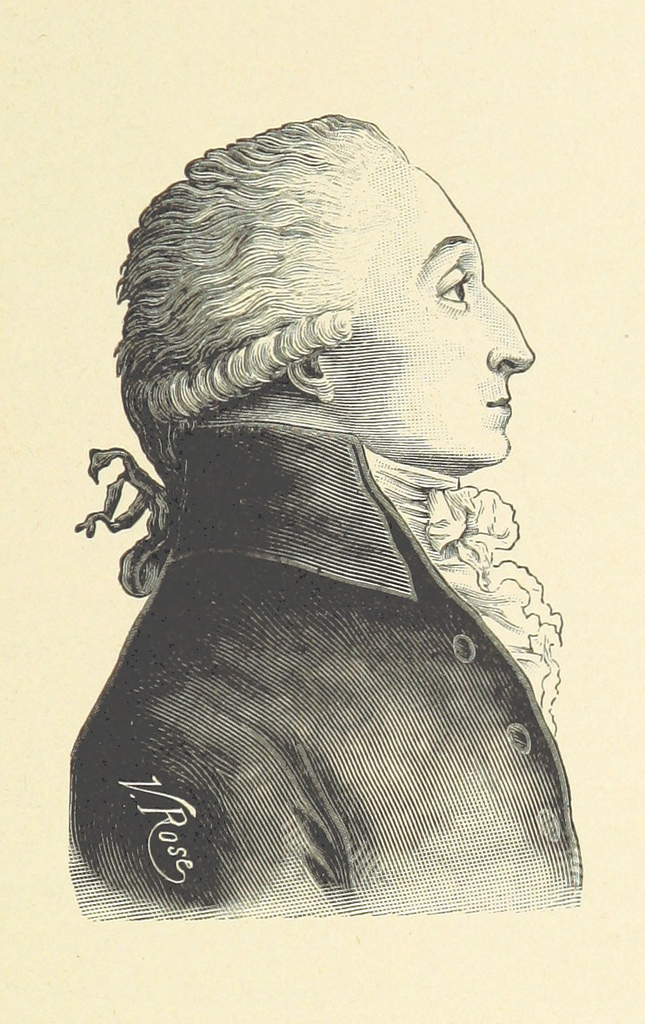
Some readers, especially those versed in French Enlightenment philosophy, will doubtless already be familiar with Montlosier, but what many often overlook is the occult side of him, his nachtseite (“night-side”).
In his memoirs, Montlosier wrote of his fascination with Franz Anton Mesmer — a Swabian doctor who in the late eighteenth-century developed a kind of proto-hypnosis called mesmerism. According to its adherents, mesmerism (also known as magnetism) worked by way of a magnetic, spirituous fluid within human beings. Simply put, a magnetiser or mesmerist sought to manipulate this hidden fluid, and thus heal his patient, by laying hands on different parts of the subject’s body, maintaining eye contact, and employing different hand gestures.
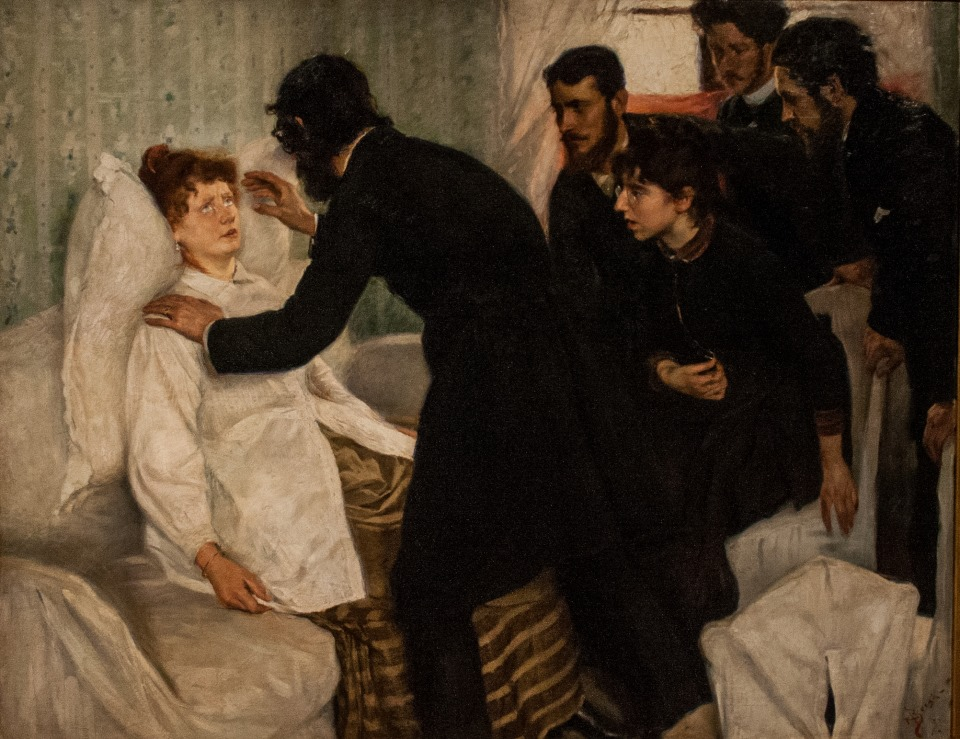
Montlosier acknowledged picking up the art from a follower of the mesmerist Charles Deslon. His first experiments focused on a young pupille in his household, an impressionable woman who apparently suffered from both somatic and psychological illnesses. Montlosier professed to exert a powerful psychic influence over her, so much so that they established what was effectively a telepathic union, enabling her to perceive exactly what he was thinking at any moment. As he grew in power, he became a kind of guérisseur,, or local healer, treating not only fellow Auvergnats but also other patients during his exile in Britain between 1794 and 1803.
Although Montlosier was confident in his skills, he admitted that mesmerism could be draining on the body and claimed to have narrowly escaped death after a particularly intensive mesmeric session with a man suffering from pleurisy. He therefore advised young mesmerists to exercise restraint and maintain purity of intentions:
“You must also ensure that within yourself you feel nothing but pure emotions; the slightest movement within you of a different nature that has the effect of producing — through sympathy — a movement of the same kind in the person subject to you, may always have, and more particularly in certain cases than in others, the most unfortunate effects. It is not enough for you to control your emotions; you must prevent them from arising. If, unfortunately, they do arise, you must turn upon yourself with the utmost severity, and feel not only pain, but shame.”
Such were the wizard of Auvergne’s views on animal magnetism. Its apparent effectiveness convinced him that strange, not readily observable or quantifiable forces pervaded material reality. Mesmerism, wrote Montlosier, was destined to “change the face” of the world. Certainly it did lay the groundwork for hypnotherapy as well as other, more esoteric practices.
Nearly two decades after Montlosier’s death, the French ex-priest Alphonse Louis Constant, better known by his nom de plume, Éliphas Lévi , brought out The Dogma and Ritual of High Magic. In it, he drew from Mesmer’s idea of the magnetic fluid (which he termed the “astral fluid”), surmising it to be the primary medium or vehicle of magical activity. Levi’s version of occultism went on to influence a number of Western countercultures and New Age religions, all of which shaped the modern world. Montlosier, it turns out, was correct.
To learn more about Clermont-Ferrand’s seemingly endless secrets, book a tour.