

Body snatching is one of the oldest illicit businesses on Earth. In the Middle Ages, shrewd adventurers plundered out-of-the-way tombs and cemeteries for bones and passed off their spoils as the relics of saints. For centuries, they smuggled these “relics” to churches across Europe, raking in fortunes.
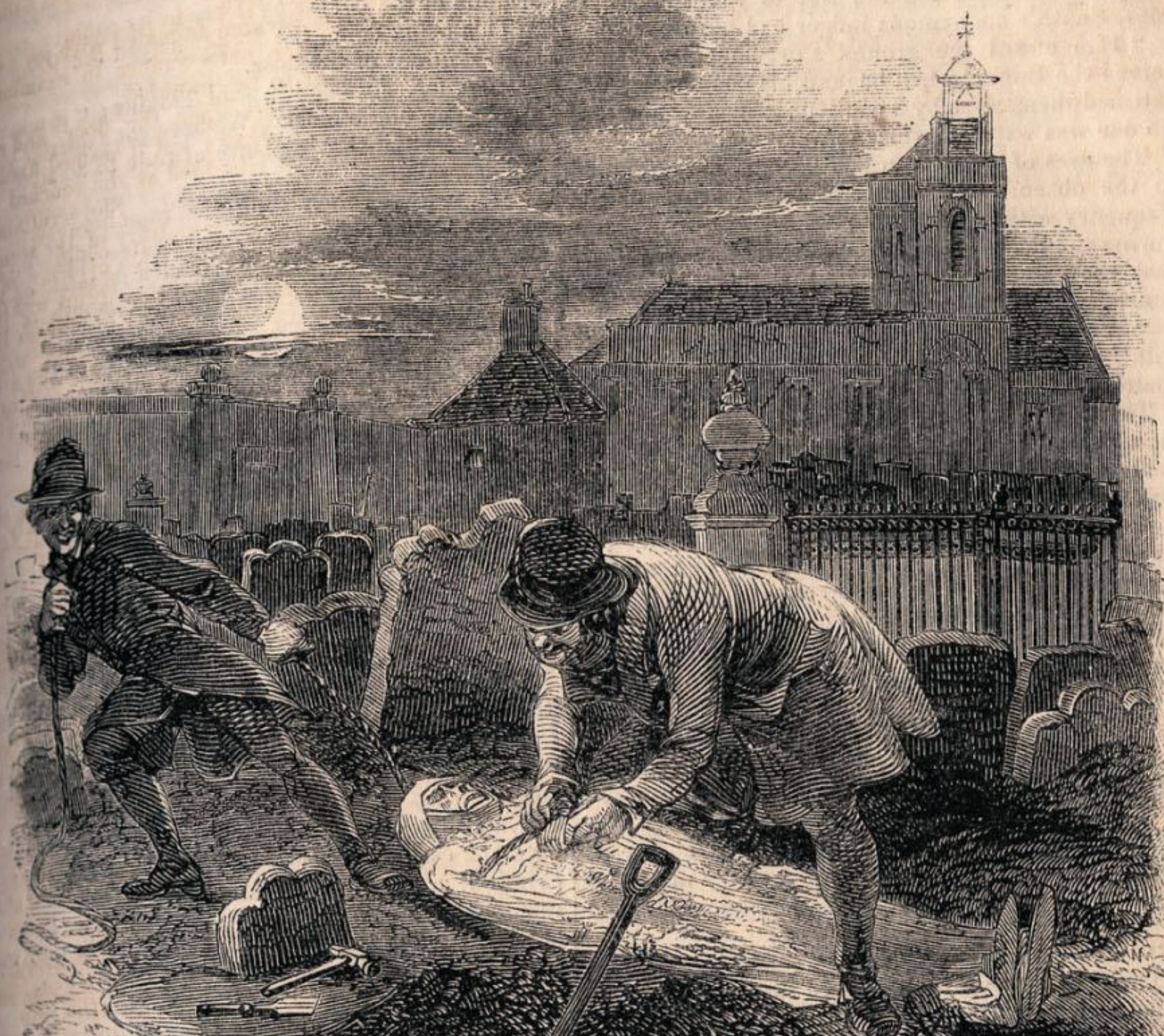
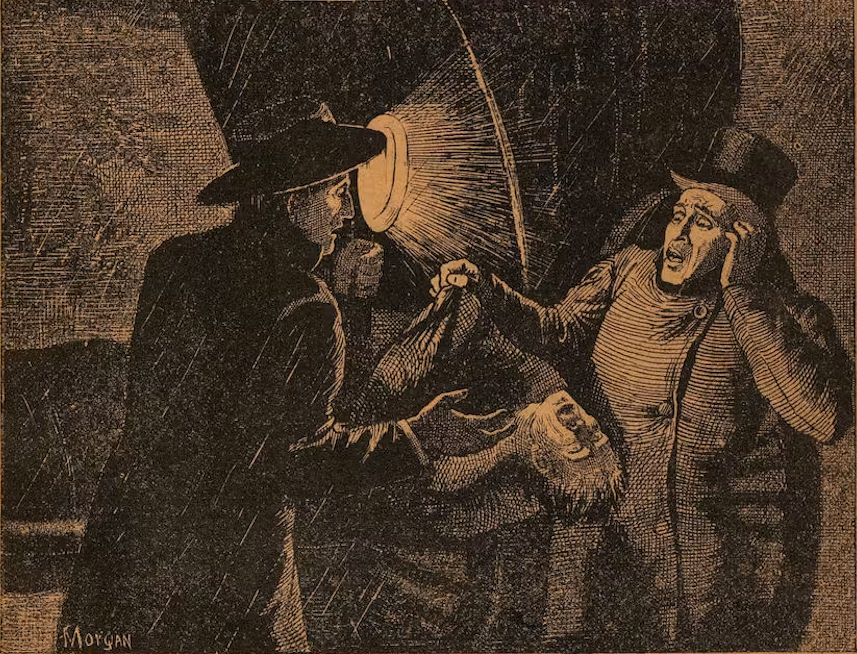
Similarly roguish black marketeers also indulged in this kind of looting in the 1700s and 1800s. Unlike their relic-trafficking predecessors, who catered to the desires of an ever-expanding, imperial Christendom, the “resurrectionists” or “resurrection men” (as they were sometimes called) sold cadavers to scientists and medical professionals.
Although the popularity of body snatching dwindled in subsequent years, a certain number of thieves continued to ply their trade under the radar. One of these apparently operated in the Greater Clermont-Ferrand area in the 1940s.
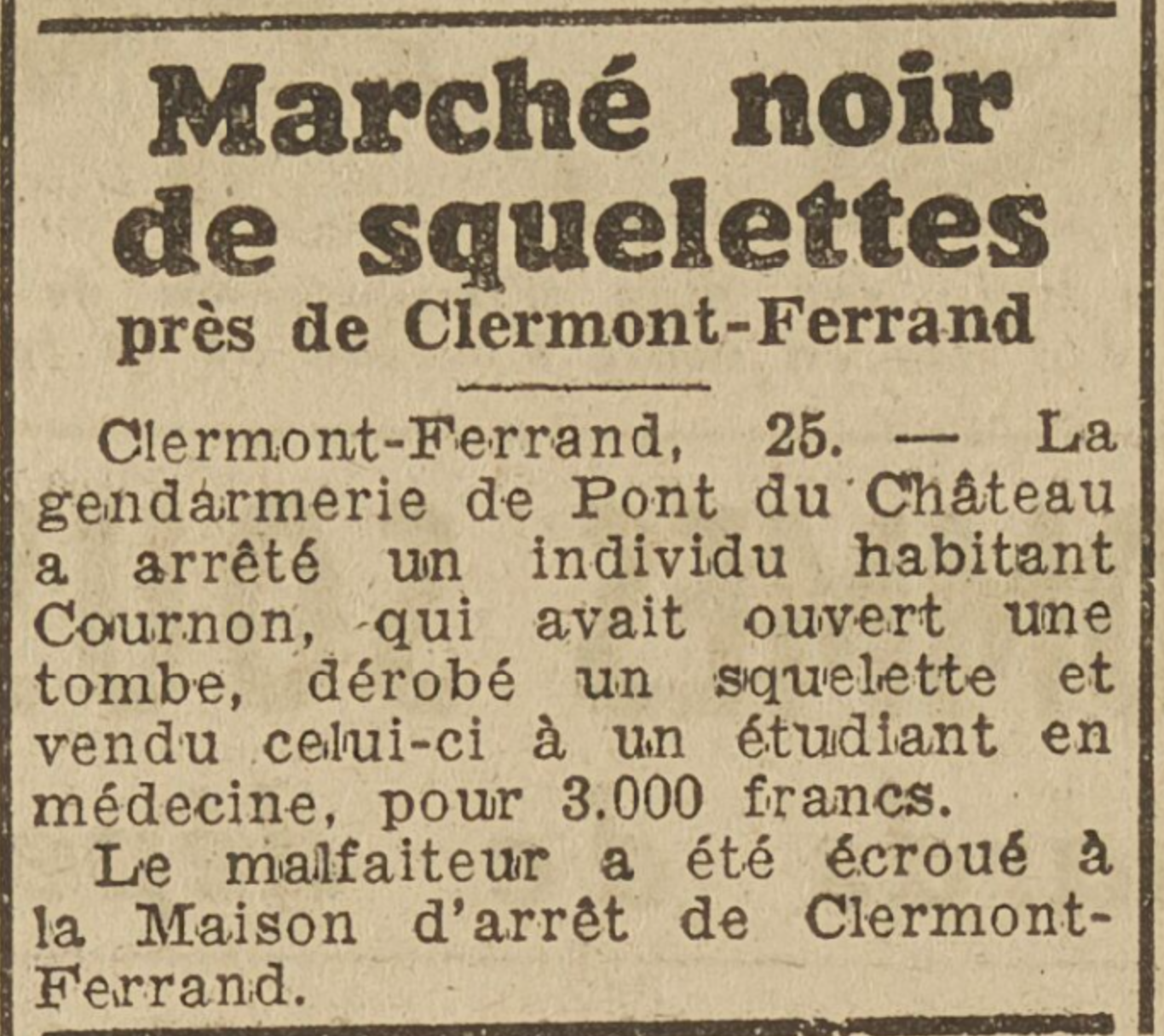
According to several news reports, a man from the town of Cournon d’Auvergne raided a tomb during Christmastide in 1947. After police in nearby Pont-du-Château (where the crime seems to have taken place) arrested him, it emerged that he had intended to sell a skeleton to a medical student for 3,000 francs (roughly €320 in today’s money).
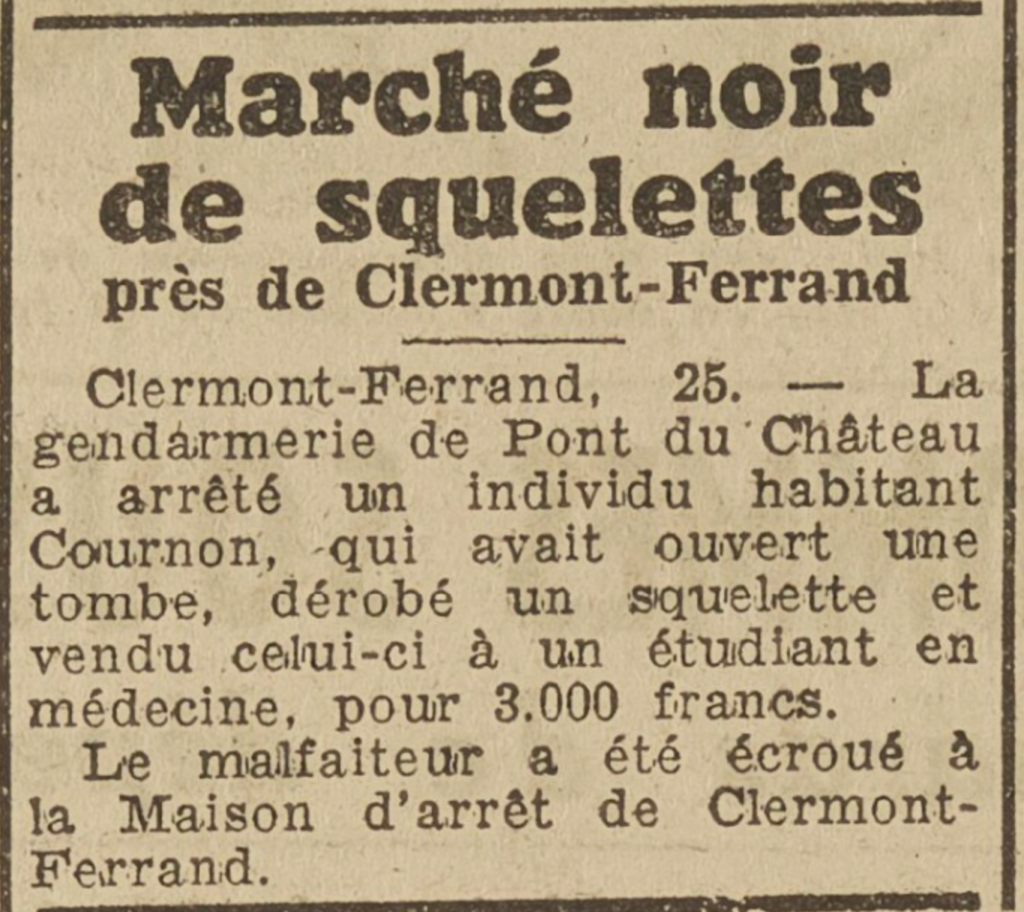
While we don’t know much else about the seller’s identity or the criminal proceedings — not even his name — the story suggests that there was a real black market in Clermont-Ferrand at the time, possibly involving people linked either to the University of Clermont’s faculty of medicine or to an Auvergnat underworld network with multiregional contacts in the medical industry. If the latter, our Cournon body snatcher was likely just one of several operators, the rest of whom managed to remain undetected.